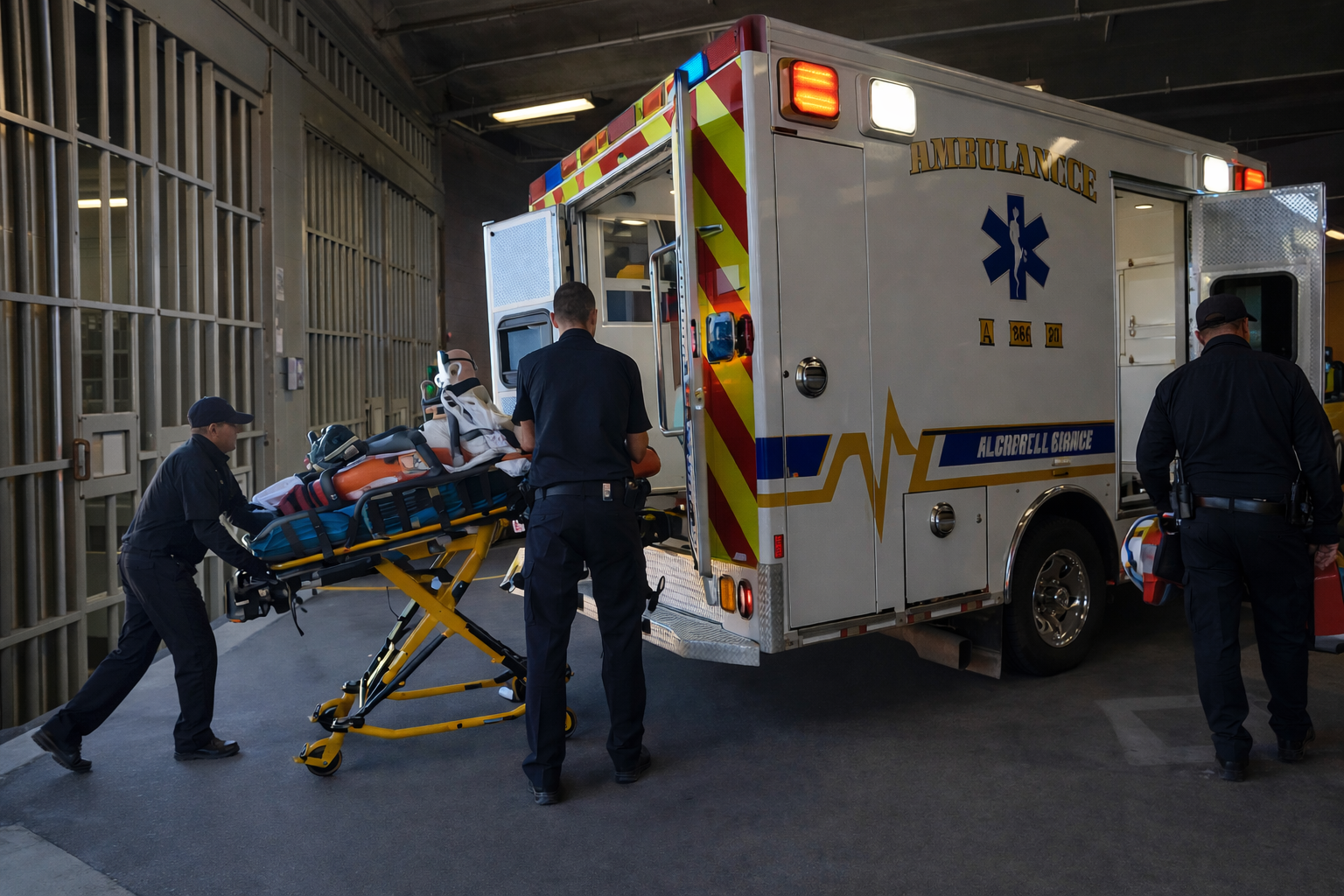
Emergency personnel responding to a medical emergency inside a jail facility. Deaths in custody typically trigger investigations by jail officials, law enforcement, and medical examiners.
What Happens After a Death in Jail?
When someone dies in jail, the event triggers a series of official investigations. These inquiries are intended to determine the cause of death in jail and whether any misconduct, negligence, or medical neglect contributed to it.
For families, the process can be confusing and opaque. The institutions involved often control the information, and the initial explanations may be brief or incomplete.
Understanding what typically happens after a death in custody can help families recognize when further legal investigation may be necessary.
The Initial Response Inside the Jail
When a detainee dies or suffers a fatal medical event in jail, staff typically initiate emergency protocols.
These may include:
- Attempted medical resuscitation
- Notification of supervisors and jail administration
- Securing the scene
- Documentation by detention staff
Depending on the circumstances, outside emergency medical personnel may also be called.
The jail will generally prepare an internal incident report describing what occurred and the actions taken by staff.
Medical Examiner Investigation
In most jurisdictions, deaths that occur in custody must be reviewed by a medical examiner or coroner.
The medical examiner may:
- Conduct an autopsy
- Review medical records
- Examine toxicology results
- Interview investigators or jail staff
The purpose of this examination is to determine the official cause and manner of death, such as natural causes, accident, suicide, or homicide.
However, the medical examiner’s role is primarily medical, not legal. Their findings may not fully address whether constitutional violations or institutional failures contributed to the death.
Law Enforcement Investigation
A law enforcement agency may also investigate a death in custody.
In some cases, this may be the same agency responsible for operating the jail. In other cases, an outside agency may be assigned to review the incident.
Investigators may collect evidence, interview witnesses, and review surveillance footage.
These investigations typically focus on whether a criminal act occurred. Even when criminal charges are not filed, the circumstances surrounding the death may still raise significant civil liability issues.
Internal Administrative Reviews
Many detention facilities conduct internal reviews after a serious incident or death.
These reviews may examine:
- Staff actions
- Compliance with jail policies
- Medical treatment provided to the detainee
- Whether procedures were followed
While internal investigations may identify problems, they are conducted by the same institution responsible for operating the facility. For families seeking answers, an independent investigation may still be necessary.
When a Death in Jail Raises Civil Rights Issues
Under the United States Constitution, individuals held in jail have the right to adequate medical care and protection from known risks.
When jail officials act with deliberate indifference to serious medical needs, their conduct may violate federal civil rights law.
Examples of situations that may lead to civil rights claims include:
- Ignoring obvious medical symptoms
- Delaying treatment for serious conditions
- Failure to respond to medical emergencies
- Inadequate monitoring of detainees at risk of suicide
- Unsafe detention conditions
These cases are often brought under 42 U.S.C. §1983, which allows individuals to seek damages when government officials violate constitutional rights.
Private Medical Contractors and Jail Healthcare
Many jails do not provide healthcare directly.
Instead, counties frequently contract with private companies to operate correctional healthcare systems inside detention facilities.
When medical providers fail to treat serious conditions or maintain adequate staffing and policies, these contractors may also be responsible for civil rights violations.
In such cases, both the government entity and the private contractor may face liability.
Why Jail Death Cases Are Complex
Cases involving deaths in custody are among the most complex forms of civil rights litigation.
They often involve:
- Multiple government agencies
- Extensive medical records
- Surveillance footage and internal reports
- Expert medical testimony
- Qualified immunity defenses
Because of these challenges, early investigation and preservation of evidence can be critical.
When Families Should Seek Legal Advice
After a death in custody, families are often given limited information about what occurred.
If there are questions about medical care, staff conduct, or the circumstances of the death, it may be important to consult an attorney experienced in civil rights litigation.
Legal counsel can help evaluate whether negligence, medical neglect, or unconstitutional conduct contributed to the death and whether a civil rights claim may be appropriate.
Related Articles
You may also find these resources helpful:
- Arizona Jail Death Lawyer
- Contractor-Run Detention Facilities and Liability
- Assault and Battery by Federal Officers
- Suicide in ICE Detention: What Families Need to Know
- Arizona Prison Healthcare Lawsuit Receivership Order