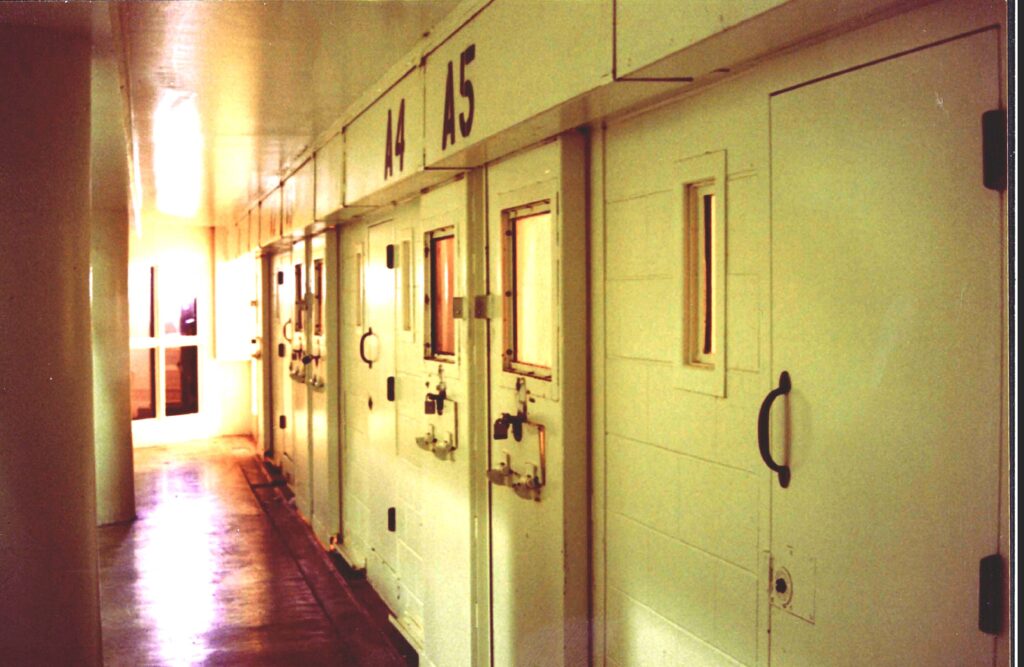
Deaths in immigration detention often raise serious questions about mental health care and suicide prevention procedures.
When someone dies by suicide in ICE detention, the official explanation is usually brief:
“The detainee took his own life.”
That statement may be factually accurate. But it does not end the legal inquiry.
This is the third in a series of articles about ICE and civil liability.
When the federal government detains a person, it takes control over that person’s housing, medical care, supervision, and safety.
Custody creates responsibility. The legal question is not just what the detainee did. Instead, the question is whether detention officials followed required safeguards designed to prevent foreseeable harm.
Even without the full records, we can still analyze these cases.
Why Custody Changes the Legal Standard
A person in ICE detention cannot leave. He cannot independently seek medical care. Nor can he obtain outside psychiatric treatment. He depends entirely on the custodial system.
That level of control creates enforceable duties.
The legal question is not whether the detainee struggled with despair. Instead, the question is whether detention officials exercised reasonable care while the detainee was in custody.
In practice, that analysis typically begins with three areas.
1. Intake Screening and Mental Health Evaluation
Most detention systems require:
- Medical intake screening
- Mental health assessment
- Suicide risk evaluation
- Documentation of prior attempts
- Documentation of prescribed medication
If staff skipped, rushed, or poorly documented the intake screening, that matters.
Likewise, if the detainee disclosed prior suicide attempts and no precautions were taken, that matters.
And if staff discontinued prescribed psychiatric medication without review, that matters.
Detention standards are not aspirational. They are operational requirements. Failure to follow them can form the foundation of a claim.
2. Suicide Watch and Monitoring
Facilities typically maintain written procedures governing:
- When to initiate a suicide watch
- The type of suicide watch
- Frequency of observation checks
- Housing in suicide-resistant cells
- Removal of ligature risks
- Documentation of rounds
- Escalation to medical staff
Suicides rarely occur when staff properly implement suicide watch procedures.
Failures arise in the details:
- Observation logs completed after the fact
- Staff recorded checks that they never actually performed
- Delays in medical response
- Staff placed the detainee in isolation without a mental health review
- Staff unaware of documented warnings
The existence of a written policy does not prove compliance.
In litigation, courts distinguish between protected policy choices and failures to carry out required procedures. That distinction is often decisive.
3. Foreseeability and Known Risk Factors
Every case is fact-specific. But certain facts immediately raise concern:
- Documented suicidal statements before death
- Known psychiatric diagnosis without monitoring
- Recent traumatic events, such as a court appearance or transfer
- Placement in segregation
- Prior suicide attempts within the same facility
Detention officials are not guarantors of safety. The legal standard is reasonable care under the circumstances.
However, when officials know — or should know — about warning signs and ignore required safeguards, liability may follow.
The Government’s Likely Defenses
In federal detention cases, the United States frequently raises the Discretionary Function Exception under the Federal Tort Claims Act (FTCA).
The argument is predictable: decisions about housing, monitoring, or staffing involve discretion.
But where mandatory screening and monitoring procedures exist, failure to follow them may fall outside that protection.
The distinction remains critical:
- Protected policy judgments are different from
- Failure to carry out required safety measures
How the claim is framed often determines whether it survives a motion to dismiss.
Contractor Facilities Complicate — But Do Not End — the Analysis
Many ICE detainees are housed in:
- Privately operated facilities
- County jails under federal contract
- Facilities with private medical providers
However, the government may argue that the personnel involved were contractors rather than federal employees.
That does not end the inquiry.
The legal questions become:
Who controlled the conduct?
What oversight did federal officials retain?
What procedures were mandatory?
These questions are frequently raised before discovery begins. Early investigation into contractual structure and operational control is critical.
What Families Should Do Immediately
If a suicide occurs in ICE custody:
- Preserve all communications and documents.
- Request incident reports and medical records promptly.
- Do not rely solely on the initial summary provided.
- Be aware of strict deadlines under the FTCA.
Under federal law, families must usually file a Standard Form 95 within two years of the claim’s accrual. Missing that deadline can bar recovery entirely.
Courts often decide jurisdictional issues early — sometimes before the full factual record is available. Delay can be costly.
Frequently Asked Questions About Suicide in ICE Detention
Can the federal government be liable for a suicide in ICE detention?
Possibly. When the government detains someone, it assumes responsibility for reasonable safety measures. Liability may arise if required intake screening, suicide monitoring, or medical procedures were not followed.
What legal claim applies to a suicide in ICE custody?
Many cases are evaluated under the Federal Tort Claims Act (FTCA), which allows certain negligence claims against the United States. The analysis focuses on whether mandatory procedures were violated.
What is the Discretionary Function Exception in suicide cases?
The government may argue that detention decisions involved discretion. However, failure to follow mandatory suicide screening, monitoring, or referral procedures may fall outside that protection.
What evidence matters in an ICE detention suicide case?
Intake screening records, mental health evaluations, suicide watch logs, surveillance video, medical records, prior incident reports, and documentation of prior attempts or warnings are often critical.
Is there a deadline to file a claim after a suicide in ICE custody?
Yes. Under the FTCA, administrative notice (often via Standard Form 95) must generally be filed within two years of accrual. Missing the deadline can bar recovery.
Bottom Line
Suicide in custody is complex. It involves mental health, institutional control, and operational safeguards.
The legal question is not whether a detainee experienced distress. The legal question is whether detention officials followed required screening, monitoring, and intervention procedures designed to prevent foreseeable harm.
When those safeguards are ignored, the law provides a path to accountability.
This article is part of an ongoing series examining ICE detention litigation under the Federal Tort Claims Act.
Any legal case will be fact-intensive and hard-fought. But the analysis begins the same way in every case:
What were the required safeguards?
And were they followed?