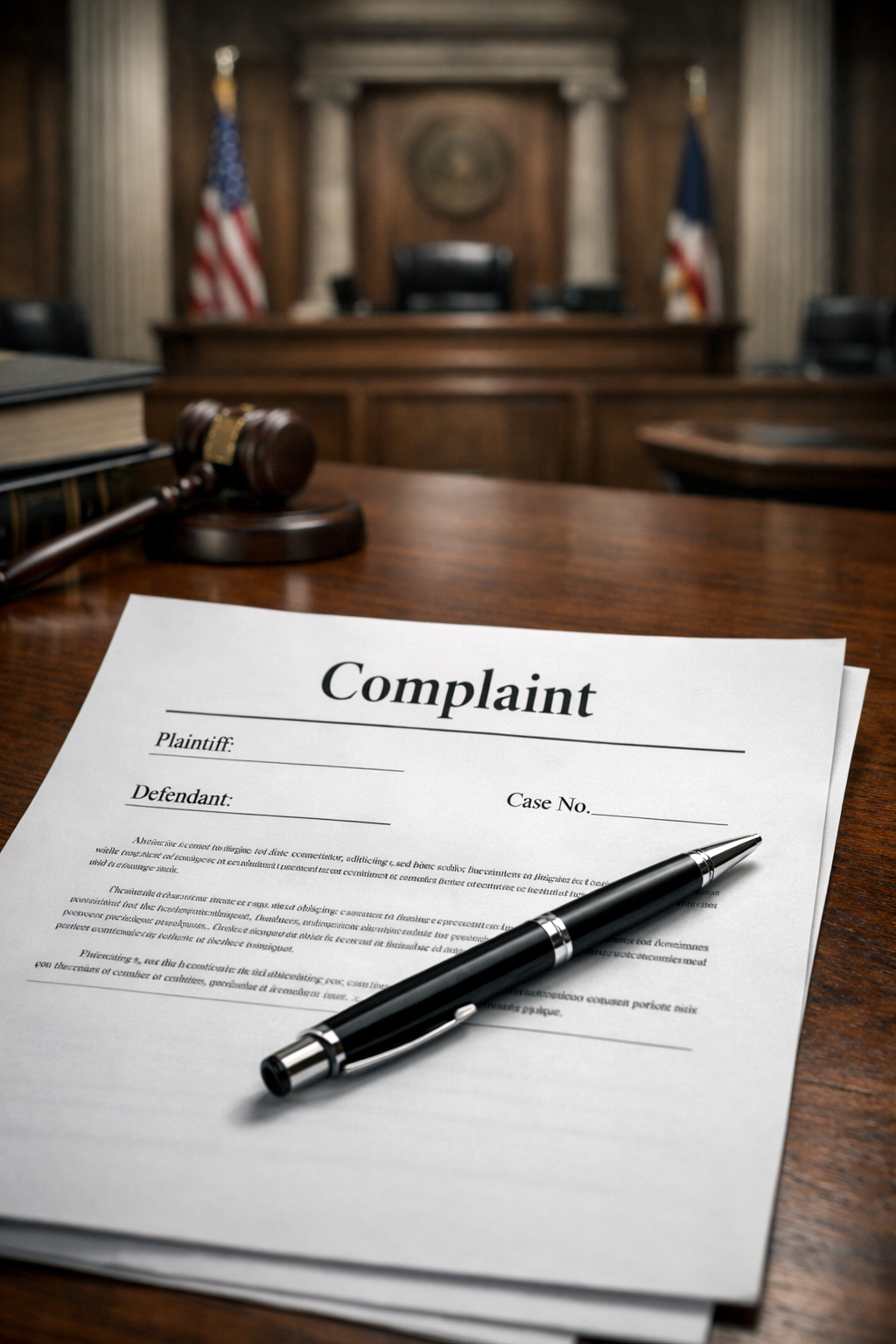
A complaint is the document that begins a civil lawsuit and defines the claims.
Every civil lawsuit begins with one document:
the complaint.
This document does more than start a case. It defines the dispute, frames the legal issues, and sets the stage for everything that follows.
If the complaint is weak, vague, or incomplete, the case may never move forward.
Understanding how a complaint works—and what it must include—is essential in civil litigation.
What Is a Complaint?
A complaint is the document that begins a civil lawsuit.
It tells the court and the defendant:
-
what happened
-
who is responsible
-
what laws were violated
-
what relief the plaintiff seeks
In federal court, complaints must comply with Rule 8 of the Federal Rules of Civil Procedure.
That rule requires a short and plain statement of the claim showing that the plaintiff is entitled to relief.
What Must a Complaint Include?
Although formats vary, most complaints follow a standard structure.
1. Caption
The caption appears at the top of the first page.
It includes:
-
the court name
-
the parties
-
the case number (once assigned)
-
the title of the document
The caption identifies the case and ensures proper filing.
2. Jurisdiction and Venue
The complaint must explain why the court has authority to hear the case.
This section typically includes:
-
subject matter jurisdiction (e.g., federal question or diversity)
-
venue (why the case belongs in that court)
If jurisdiction is missing or incorrect, the court may dismiss the case.
3. Parties
This section identifies the plaintiff and the defendant.
It usually includes:
-
names
-
locations
-
roles in the dispute
In civil rights cases, this section often identifies whether defendants acted under color of law.
4. Factual Allegations
This is the core of the complaint.
The plaintiff must describe what happened in clear, chronological detail.
Strong factual allegations:
-
tell a coherent story
-
include specific facts
-
avoid conclusions without support
Courts do not accept bare legal conclusions. The complaint must include enough factual detail to make the claim plausible.
5. Causes of Action
Each legal claim appears in a separate section.
These are often labeled as:
-
Count I
-
Count II
-
Count III
Each count should:
-
identify the legal theory
-
incorporate relevant facts
-
explain how the defendant violated the law
For example, a civil rights complaint may include claims under 42 U.S.C. § 1983.
6. Prayer for Relief
The complaint must state what the plaintiff is asking for.
This may include:
-
compensatory damages
-
punitive damages
-
injunctive relief
-
attorney’s fees
This section tells the court what outcome the plaintiff seeks.
7. Jury Demand
If the plaintiff wants a jury trial, the complaint must include a jury demand.
Failing to request a jury at the outset can waive that right.
Federal Pleading Standards: “Plausibility”
Federal courts apply a plausibility standard.
This standard comes from cases such as:
-
Bell Atlantic Corp. v. Twombly
-
Ashcroft v. Iqbal
Under this standard, the complaint must include enough facts to make the claim plausible, not merely possible.
In practice, this means:
-
facts matter more than labels
-
detail matters more than conclusions
-
clarity matters more than volume
Common Mistakes in Drafting a Complaint
Many cases fail at the pleading stage.
Common mistakes include:
Vague Allegations
General statements without facts do not satisfy pleading standards.
Instead of saying:
“The defendant violated my rights”
The complaint must explain:
-
how
-
when
-
by whom
Legal Conclusions Without Facts
Courts disregard conclusions that are not supported by facts.
For example:
“The defendant acted negligently”
This statement means little without supporting detail.
Naming the Wrong Defendants
Suing the wrong party can derail a case early.
This issue often arises in cases involving:
-
government entities
-
private contractors
-
supervisory officials
Failing to Allege Required Elements
Each claim has legal elements.
If the complaint does not address those elements, the court may dismiss it.
What Happens After the Complaint Is Filed?
Once the plaintiff files the complaint:
-
The plaintiff must serve the defendant
-
The defendant may file a motion to dismiss
-
The case moves into discovery if it survives
The complaint often determines how the rest of the case unfolds.
Why the Complaint Matters
The complaint is not just a formality.
It:
-
frames the entire case
-
limits the issues
-
guides discovery
-
shapes motions and trial strategy
A strong complaint puts the case on solid footing from the beginning.
Key Takeaway
The complaint is the foundation of every civil lawsuit.
It must:
-
tell a clear story
-
include specific facts
-
state valid legal claims
-
meet procedural requirements
If done correctly, it positions the case to move forward.
If done poorly, it may end the case before it begins.
For more information, review our guide to civil litigation.
Frequently Asked Questions About a Civil Complaint
Here are answers to common questions about civil complaints and how lawsuits begin.
What is a civil complaint?
A civil complaint is the document that starts a lawsuit. It explains the facts,
identifies the parties, states the legal claims, and tells the court what relief
the plaintiff seeks.
What must a complaint include?
A complaint usually includes a caption, jurisdiction and venue allegations, party
information, factual allegations, causes of action, a request for relief, and
sometimes a jury demand.
What happens after a complaint is filed?
After filing the complaint, the plaintiff must serve the defendant. The defendant
may then answer the complaint or file a motion to dismiss. If the case survives
those early steps, it moves into discovery.
Can a complaint be amended?
Yes. Courts often allow plaintiffs to amend a complaint, especially early in the
case. An amendment may add facts, correct deficiencies, or revise legal claims.
Why does the complaint matter so much?
The complaint frames the case from the start. It shapes the legal issues, guides
discovery, affects motion practice, and can determine whether the case moves forward
at all.