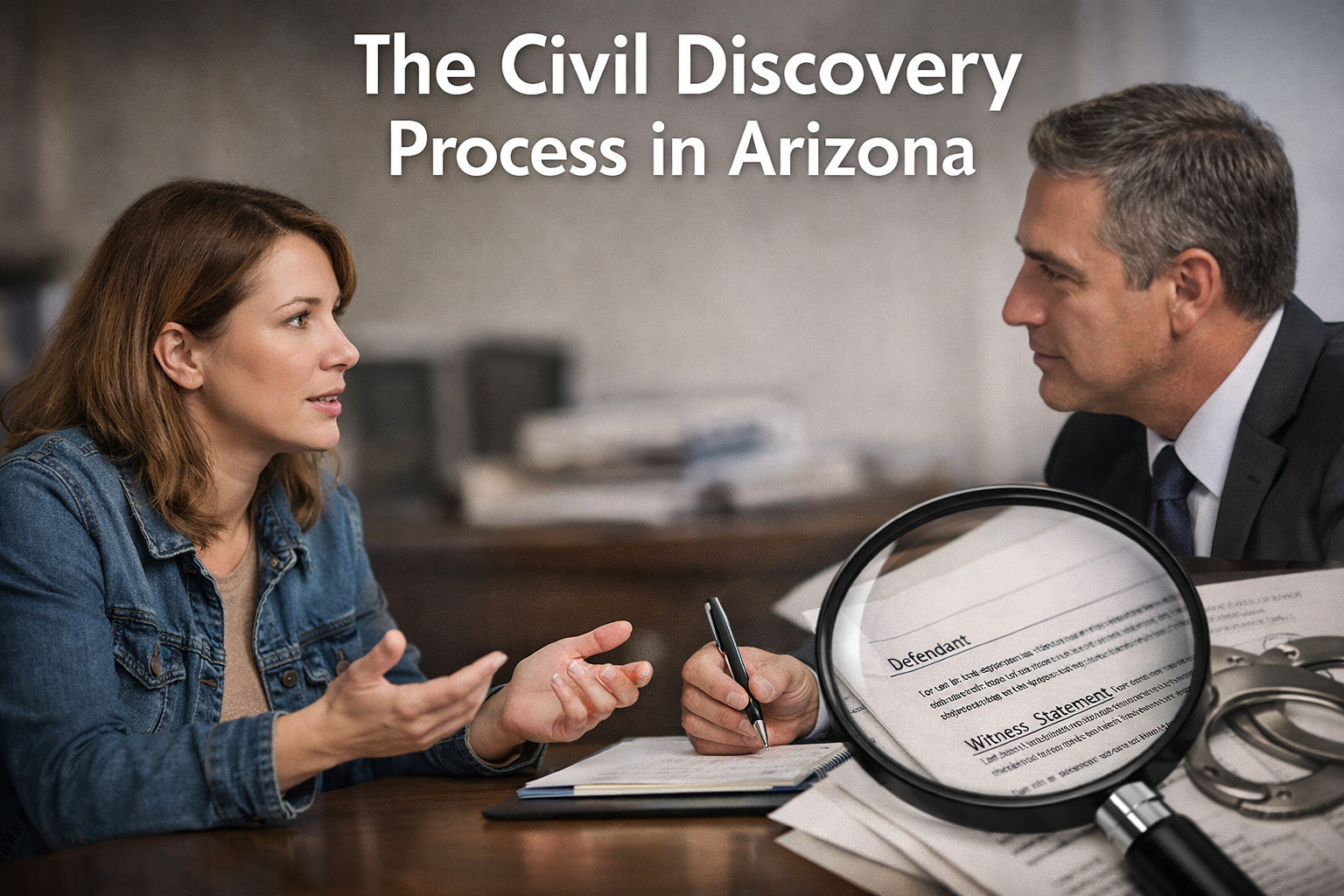
The civil discovery process allows both sides to gather evidence before trial.
The civil discovery process allows both sides in a lawsuit to gather evidence before trial. It forces each party to share facts, documents, and testimony.
Courts require discovery in almost every civil case. As a result, no one should walk into a trial surprised by the evidence.
What Is Civil Discovery?
Civil discovery is the stage of litigation where each side demands information from the other.
Learn more about the stages of civil litigation.
Instead of guessing what the other side knows, attorneys use discovery tools to uncover the truth.
For example, lawyers can:
- Ask written questions
- Request documents
- Take sworn testimony
Because of this, discovery turns a case from speculation into evidence.
The scope of discovery hinges on the Complaint.
Learn more about the Complaint in civil litigation.
Why Discovery Matters
Discovery drives the outcome of a case.
First, it reveals what actually happened. Next, it shows what evidence exists. Then, it exposes weaknesses in claims or defenses.
In other words, strong discovery makes the trial predictable. Weak discovery leaves everything to chance.
Types of Discovery Common in Civil Litigation
Interrogatories
Interrogatories are written questions that the other side must answer under oath.
Attorneys use them to identify witnesses, clarify legal positions, and lock in key facts early.
Rule 33 of the Federal Rules of Procedure governs interrogatories in federal court.
Rule 33 of the Arizona Rules of Procedure governs interrogatories in Arizona state courts.
Requests for Production
Requests for production demand documents and records.
These requests often uncover medical records, emails, internal reports, and policy documents.
Because documents do not forget, they often tell the real story.
Rule 34 of the Federal Rules of Procedure governs requests for production in federal court.
Rule 34 of the Arizona Rules of Procedure governs requests for production in Arizona state courts.
Depositions
Depositions involve live, sworn testimony before trial.
During a deposition, an attorney questions a witness face-to-face while a court reporter records every answer.
Depositions test credibility, pin down testimony, and expose contradictions.
Rule 30 of the Federal Rules of Procedure governs depositions in federal court.
Rule 30 of the Arizona Rules of Procedure governs depositions in Arizona state courts.
Learn more about how depositions work in civil cases.
Requests for Admission
Requests for admission ask the other side to admit or deny specific statements.
These requests narrow the issues and streamline the case for trial.
Rule 36 of the Federal Rules of Procedure governs requests for admissions in federal court.
Rule 36 of the Arizona Rules of Procedure governs requests for admissions in Arizona state courts.
Discovery Timeline in Arizona
In Arizona, courts set a schedule for the civil discovery process early in the case.
Learn more about the timeline and the scheduling order in civil litigation.
Typically, the timeline includes initial disclosures, written discovery, depositions, and expert disclosures.
Each deadline matters. If a party misses one, the court may exclude evidence or impose sanctions.
Common Discovery Disputes
Discovery often leads to conflict.
For example, parties may refuse to produce documents, give incomplete answers, or delay responses.
When this happens, attorneys file motions to compel.
If the court finds misconduct, it can impose serious penalties.
See how courts handle discovery violations and Rule 37 sanctions.
Strategic Use of Discovery
Good lawyers do not treat discovery as paperwork. Instead, they use it to control the case.
They sequence requests to build pressure, lock in testimony, and expose contradictions.
Because of this, discovery becomes leverage—not just procedure.
Civil Rights Cases and Discovery
Discovery becomes even more important in civil rights cases.
Government agencies and private contractors often control critical evidence, including medical records and internal investigations.
Without aggressive discovery, that evidence stays hidden.
As a result, success often depends on persistence and precision.
Read more about civil rights litigation in Arizona.
Talk to an Arizona Civil Rights Attorney
If your case involves jail neglect, police misconduct, or government liability, the civil discovery process will shape the outcome.
An experienced attorney can push for evidence, challenge improper objections, and hold the other side accountable.
Quick Takeaways
- The civil discovery process forces both sides to share evidence
- Attorneys use interrogatories, document requests, depositions, and admissions
- Courts enforce strict deadlines
- Strong discovery builds leverage and exposes the truth
Frequently Asked Questions About Civil Discovery
What is discovery in a civil case?
Discovery is the process where both sides exchange information, documents, and testimony before trial to prepare their case.
What are the main types of discovery?
The main types include interrogatories, requests for production, depositions, and requests for admission.
How long does discovery take?
Discovery timelines vary, but most cases follow a court scheduling order that sets deadlines for written discovery, depositions, and expert disclosures.
Can a party refuse discovery?
A party can object to discovery requests, but improper refusal can result in court sanctions, including penalties or exclusion of evidence.