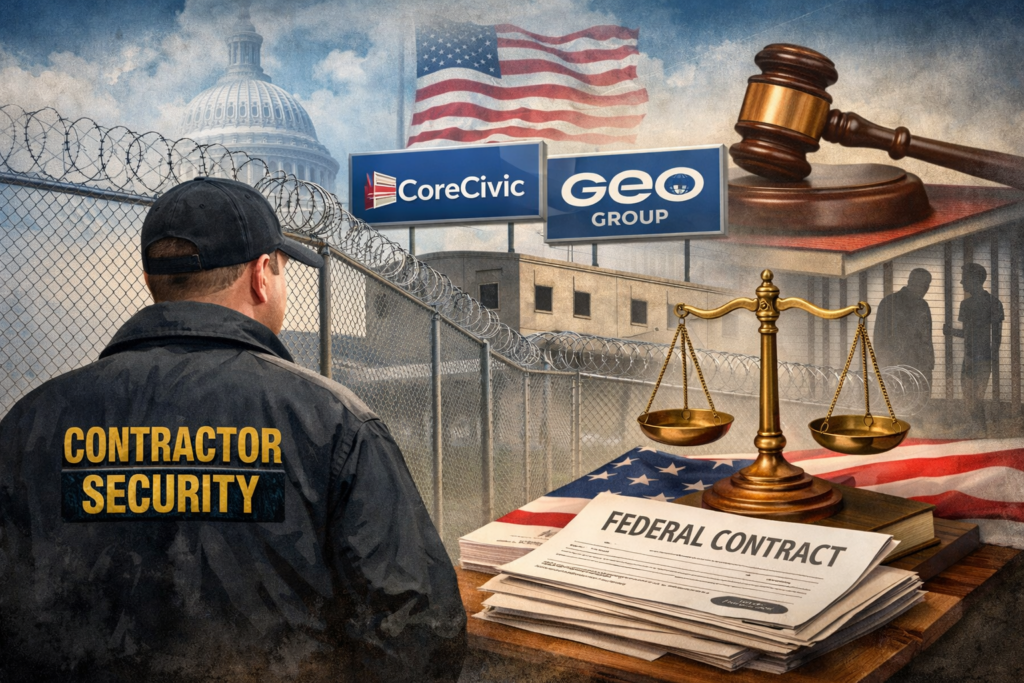
 Contractor-Run ICE Detention Facilities and Civil Liability
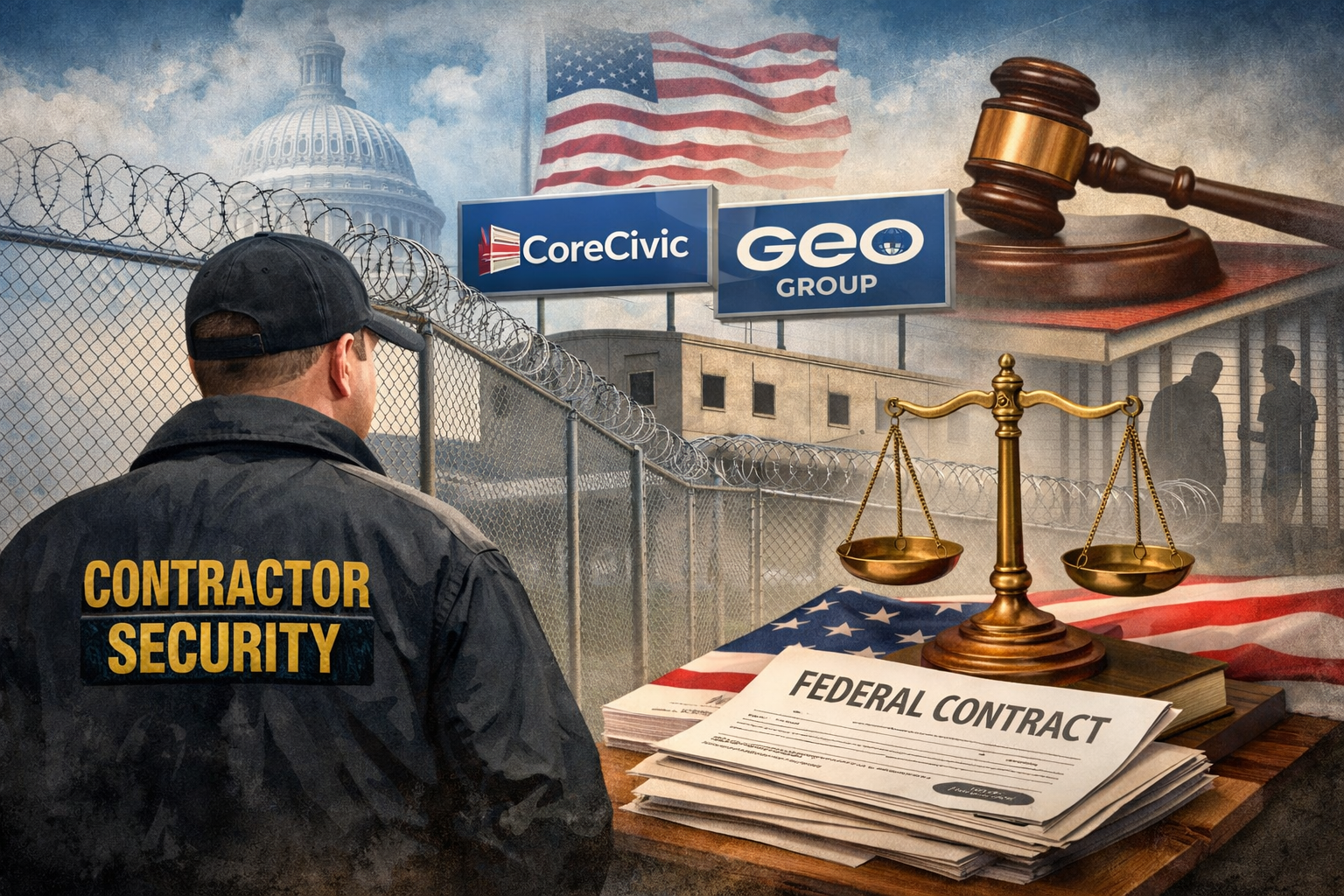
When someone is injured or dies in a private ICE detention facility, determining legal responsibility can be complicated. Families often assume the federal government is automatically responsible.
Sometimes it is.
But many ICE detention facilities are operated by private contractors under federal agreements. Private ICE detention facility liability often arises when a contractor operating an immigration detention center fails to provide adequate medical care or protect detainees from harm. When that is the case, liability analysis changes — and sometimes the United States is not the proper defendant.
This is the fifth article in a series examining ICE detention litigation, the Federal Tort Claims Act (FTCA), and civil liability for harm in immigration custody.
Understanding whether a facility is contractor-run is often the first legal step in an ICE detention injury or wrongful death case.
Who Operates ICE Detention Facilities?
ICE contracts with private prison operators to manage many immigration detention centers. Two of the largest operators are:
-
CoreCivic
-
GEO Group
Under these federal contracts:
-
ICE sets detention standards and oversight requirements
-
The contractor manages daily operations
-
Contractor employees handle supervision, housing, discipline, and medical care
This structure matters.
If a detainee is:
-
Denied medical care
-
Subjected to excessive force
-
Improperly placed in segregation
-
Assaulted by staff or other detainees
-
Not protected from suicide risk
The central legal question becomes:
Who controlled the conduct that caused the harm — ICE or the private contractor?
The Federal Tort Claims Act (FTCA) and the Independent Contractor Exception
The Federal Tort Claims Act (FTCA) allows negligence claims against the United States for misconduct by federal employees acting within the scope of employment.
But the FTCA contains a critical limitation:
Independent contractors are not federal employees.
If an ICE detention facility is operated by a private company, the United States frequently invokes what is known as the independent contractor exception.
The argument is simple:
The individuals involved were contractor personnel.
Therefore, the United States is not liable under the FTCA.
Courts analyze whether the federal government exercised detailed, day-to-day operational control over the conduct at issue.
If the government retained only general oversight — but not operational control — FTCA claims may be dismissed.
Funding a facility is not the same as controlling its operations.
That distinction can determine whether a federal court even has jurisdiction.
Can You Sue a Private ICE Detention Contractor?
Yes — in many cases, the private detention operator may be sued directly under state tort law.
Potential claims may include:
-
Medical negligence
-
Negligent supervision
-
Wrongful death
-
Assault and battery
-
Failure to protect
-
Premises liability
Unlike the federal government, private contractors do not enjoy sovereign immunity.
However, these cases often involve:
-
Government contractor defenses
-
Indemnification agreements
-
Preemption arguments
-
Arbitration clauses
-
Complex insurance coverage structures
ICE contractor litigation is rarely straightforward.
What About Constitutional Claims Under Bivens?
In limited circumstances, constitutional claims against federal officers may be brought under Bivens v. Six Unknown Named Agents.
But the Supreme Court has significantly restricted Bivens remedies — particularly in immigration and national security contexts.
Courts are especially hesitant to extend Bivens liability to private corporations operating detention facilities.
As a result:
-
FTCA claims may be barred by the independent contractor exception
-
Bivens claims may be unavailable or restricted
-
State-law negligence or wrongful death claims against the contractor may remain the primary path to accountability
The legal theory depends on who exercised operational control.
ICE Oversight Does Not Automatically Eliminate Liability
Contractors often argue they complied with ICE detention standards.
But contractual compliance does not automatically shield a company from liability.
If contractor staff:
-
Ignored known medical risks
-
Failed to implement suicide prevention protocols
-
Used excessive force
-
Failed to separate vulnerable detainees
-
Violated mandatory internal procedures
Liability may arise under ordinary negligence principles.
A federal contract establishes expectations between ICE and the contractor.
It does not eliminate the contractor’s duty to exercise reasonable care toward detainees.
What ICE Contractor Litigation Actually Requires
Cases involving contractor-run ICE facilities often require early investigation into:
-
The federal detention contract
-
Operational control provisions
-
Staffing ratios and training policies
-
Internal audits and inspection reports
-
Communications between ICE and contractor officials
-
The precise chain of command
Jurisdictional and immunity issues are frequently raised before discovery.
Identifying the correct defendant at the outset is critical.
Frequently Asked Questions About Contractor-Run ICE Facilities
Can the federal government avoid liability if a private company runs the detention center?
Possibly. Under the FTCA’s independent contractor exception, the United States may argue it is not liable for negligence committed by contractor employees unless the government exercised detailed operational control.
Can a private ICE detention contractor be sued for wrongful death?
Yes. Private detention operators may be sued under state law for medical negligence, wrongful death, failure to protect, or assault, depending on the facts.
Does ICE oversight make the government responsible for everything that happens in detention?
No. Oversight and funding do not automatically create liability. Courts examine who controlled the specific conduct that caused the injury.
Are constitutional claims available against private detention companies?
Generally, courts are reluctant to extend Bivens remedies to private corporations operating detention facilities. Most viable claims arise under state tort law.
How do I know whether a facility is contractor-operated?
Facility ownership and operational contracts can often be identified through ICE detention listings, federal procurement records, and public contract disclosures. Determining this early is important in evaluating potential claims.
Bottom Line
In ICE detention injury and wrongful death cases, identifying whether the facility was contractor-run is not a technical detail.
It is the foundation of the case.
If the facility was operated by a private company:
-
The FTCA may not apply.
-
The United States may assert immunity.
-
The contractor may be the primary defendant.
Jurisdictional issues can end a case before the merits are reached.
Early legal analysis of operational control, contractual structure, and applicable remedies is critical.
Call for Evaluation
If a family member was seriously injured or died in an ICE detention facility — whether operated by the federal government or a private contractor — the legal analysis is fact-specific and time-sensitive.
Federal claims under the FTCA have strict administrative deadlines. State-law claims may have separate statutes of limitation.
If you believe detention officials or a contractor failed to provide reasonable medical care or safety protections, an early evaluation can determine:
-
Who controlled the conduct
-
What claims are legally available
-
Whether federal or state law applies
-
What deadlines govern the case
For a confidential consultation regarding ICE detention injury or wrongful death claims, contact the Law Offices of David J. Don.